Dispositivos para el hogar inteligente: sopesando las ventajas y desventajas
Comodidad y automatización: un arma de doble filo
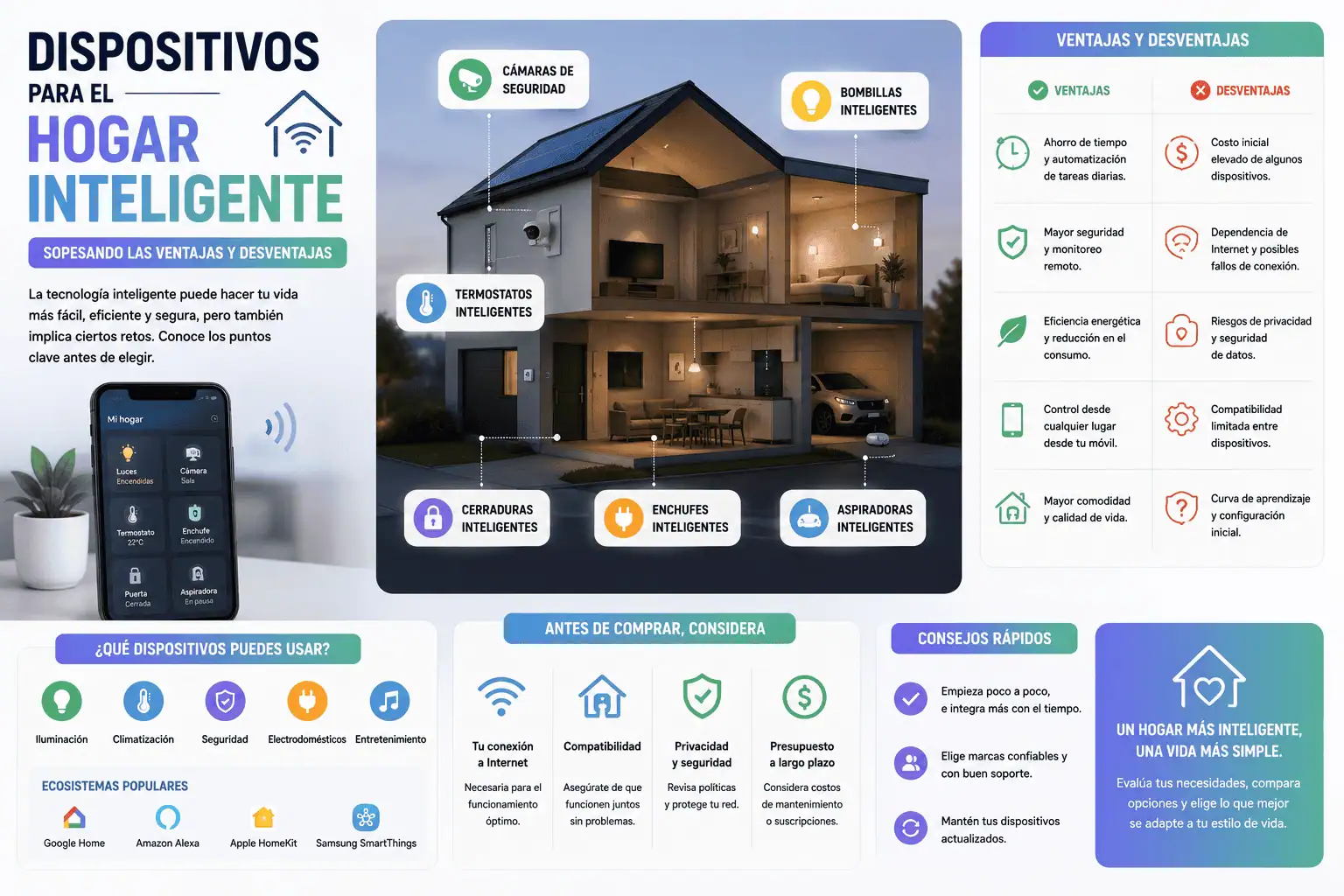
El atractivo de un hogar inteligente reside en su promesa de comodidad. Imagínese ajustar el termostato desde la oficina, precalentar el horno de camino a casa o atenuar automáticamente las luces al comenzar una película. Los dispositivos para el hogar inteligente, desde termostatos y sistemas de iluminación inteligentes hasta electrodomésticos y sistemas de seguridad, ofrecen un nivel de automatización que simplifica las rutinas diarias y aumenta el confort.
Sin embargo, esta comodidad tiene un precio. La configuración inicial puede ser compleja y llevar mucho tiempo, ya que requiere la instalación de varios dispositivos y su configuración para que funcionen a la perfección. Además, la dependencia de la tecnología puede generar dependencia. Un corte de luz o una falla de internet pueden dejar inservibles muchos dispositivos inteligentes, interrumpiendo las rutinas y generando frustración. Piense en el posible inconveniente de quedarse fuera de casa por una cerradura inteligente defectuosa o no poder controlar la calefacción en pleno invierno sin conexión a internet.
Eficiencia energética: ¿Ahorro real o ecoblanqueo?
Los termostatos inteligentes, como los de Nest y Ecobee, aprenden tus hábitos de calefacción y refrigeración y ajustan automáticamente la temperatura para optimizar el consumo de energía. Los sistemas de iluminación inteligentes te permiten atenuar las luces, encenderlas y apagarlas a distancia, e incluso programar esquemas de iluminación para simular la presencia de una persona en casa cuando no estás, disuadiendo así a posibles ladrones. Los electrodomésticos inteligentes, como los frigoríficos con funciones de monitorización de energía, te proporcionan información sobre el consumo energético y te ayudan a identificar áreas donde puedes ahorrar energía.
Si bien el potencial de ahorro energético es innegable, el ahorro real suele depender del comportamiento del usuario y de los dispositivos específicos instalados. Si no se supervisa y ajusta activamente la configuración del termostato inteligente, es posible que no se obtenga un ahorro energético significativo. Del mismo modo, instalar bombillas inteligentes sin reducir conscientemente el consumo general de iluminación puede generar beneficios mínimos. Algunos argumentan que el proceso de fabricación y la eliminación de dispositivos inteligentes tienen un impacto ambiental significativo, lo que podría contrarrestar parte del ahorro energético que proporcionan durante su vida útil. Una evaluación crítica de los hábitos de consumo energético y una cuidadosa selección de dispositivos inteligentes de bajo consumo son cruciales para obtener beneficios ambientales y económicos tangibles.
Seguridad y monitorización: ¿Protección mejorada o objetivo vulnerable?
Smart home security systems offer enhanced protection against intruders and provide real-time monitoring of your property. Smart doorbells with built-in cameras allow you to see and speak to visitors remotely, even when you’re not home. Smart security cameras provide continuous surveillance of your property, recording footage and sending alerts to your smartphone if motion is detected. Smart locks eliminate the need for physical keys, providing keyless entry and allowing you to grant temporary access to guests or service providers.
However, the interconnected nature of smart home security systems also creates potential vulnerabilities. Hackers can exploit security flaws in smart devices to gain unauthorized access to your home network, potentially stealing sensitive information, disabling your security system, or even gaining control of your smart devices. News stories abound regarding compromised baby monitors, hijacked security cameras, and manipulated smart locks. Robust security measures, such as strong passwords, two-factor authentication, and regular firmware updates, are essential to protect your smart home security system from cyberattacks. Furthermore, carefully research the security reputation of the device manufacturer before purchasing any smart security devices.
Cost: Initial Investment vs. Long-Term Value
The initial cost of setting up a smart home can be significant. Smart devices often come with a premium price tag compared to their traditional counterparts. In addition to the cost of the devices themselves, you may also need to factor in the cost of professional installation, particularly for complex systems like whole-house audio or sophisticated security setups.
While the upfront investment can be substantial, it’s important to consider the long-term value proposition. Smart home devices can potentially save you money on energy bills, reduce insurance premiums (in some cases), and increase the resale value of your home. Furthermore, the enhanced convenience and security provided by smart home devices can improve your quality of life and provide peace of mind. A careful cost-benefit analysis, considering your individual needs and priorities, is essential to determine whether a smart home is a worthwhile investment.
Privacy Concerns: Data Collection and Surveillance
Smart home devices collect vast amounts of data about your habits, preferences, and activities. Smart speakers listen to your voice commands, smart TVs track your viewing habits, and smart appliances monitor your usage patterns. This data can be used to personalize your experience, improve device functionality, and provide valuable insights to manufacturers. However, it also raises serious privacy concerns.
The data collected by smart home devices can be vulnerable to unauthorized access and misuse. Hackers can potentially gain access to your data, and manufacturers may share your data with third parties without your explicit consent. Furthermore, the constant surveillance provided by smart cameras and microphones can create a sense of unease and erode your privacy. Carefully review the privacy policies of smart device manufacturers and adjust your privacy settings to minimize data collection. Consider using privacy-focused smart home devices that prioritize data security and user privacy. Also, be mindful of where you place cameras and microphones, ensuring they are not invading the privacy of yourself or others.
Interoperability and Compatibility: A Fragmented Ecosystem
The smart home market is currently fragmented, with numerous competing platforms and protocols. This can make it challenging to choose devices that work seamlessly together. Some smart devices may only be compatible with specific platforms, such as Amazon Alexa, Google Assistant, or Apple HomeKit. This can limit your choices and force you to stick with a particular ecosystem.
Before investing in smart home devices, research their compatibility with your existing smart home setup and your preferred voice assistant platform. Look for devices that support open standards, such as Zigbee or Z-Wave, which promote interoperability between different devices and manufacturers. Consider using a smart home hub that can act as a central control point for all your smart devices, regardless of their underlying protocol. The Matter standard, a new interoperability protocol backed by major tech companies, aims to address this fragmentation, promising greater compatibility and simpler setup processes in the future.
Technological Obsolescence: The Shelf Life of Smart Devices
Smart technology evolves rapidly. New features, functionalities, and security updates are constantly being released. This means that smart devices can become obsolete relatively quickly, requiring you to upgrade them to stay current with the latest technology and security standards.
Consider the long-term cost of ownership when purchasing smart home devices. Choose devices from reputable manufacturers who provide regular software updates and security patches. Look for devices that are designed to be modular and upgradeable, allowing you to replace individual components without having to replace the entire device. Be aware that manufacturers may discontinue support for older devices, rendering them unusable or vulnerable to security threats.
User-Friendliness and Accessibility: Bridging the Digital Divide
Si bien los dispositivos para el hogar inteligente están diseñados para simplificar la vida diaria, su complejidad puede resultar abrumadora para algunos usuarios. Configurar estos dispositivos requiere cierto nivel de conocimientos técnicos. Además, la dependencia de los teléfonos inteligentes y las aplicaciones móviles puede suponer un obstáculo para quienes no se sienten cómodos con la tecnología o tienen acceso limitado a estos dispositivos.
Los fabricantes de dispositivos para el hogar inteligente se centran cada vez más en mejorar la facilidad de uso y la accesibilidad. Las interfaces de control por voz, los procesos de configuración simplificados y las aplicaciones móviles intuitivas hacen que la tecnología del hogar inteligente sea más accesible para un mayor número de usuarios. Sin embargo, la brecha digital sigue siendo un desafío. Asegúrese de que los dispositivos inteligentes que elija sean fáciles de usar y comprender, y ofrezca opciones de control alternativas para los usuarios que no se sientan cómodos con los teléfonos inteligentes o los asistentes de voz. Considere la posibilidad de brindar capacitación y asistencia a familiares o amigos que puedan necesitar ayuda para configurar y usar los dispositivos del hogar inteligente.