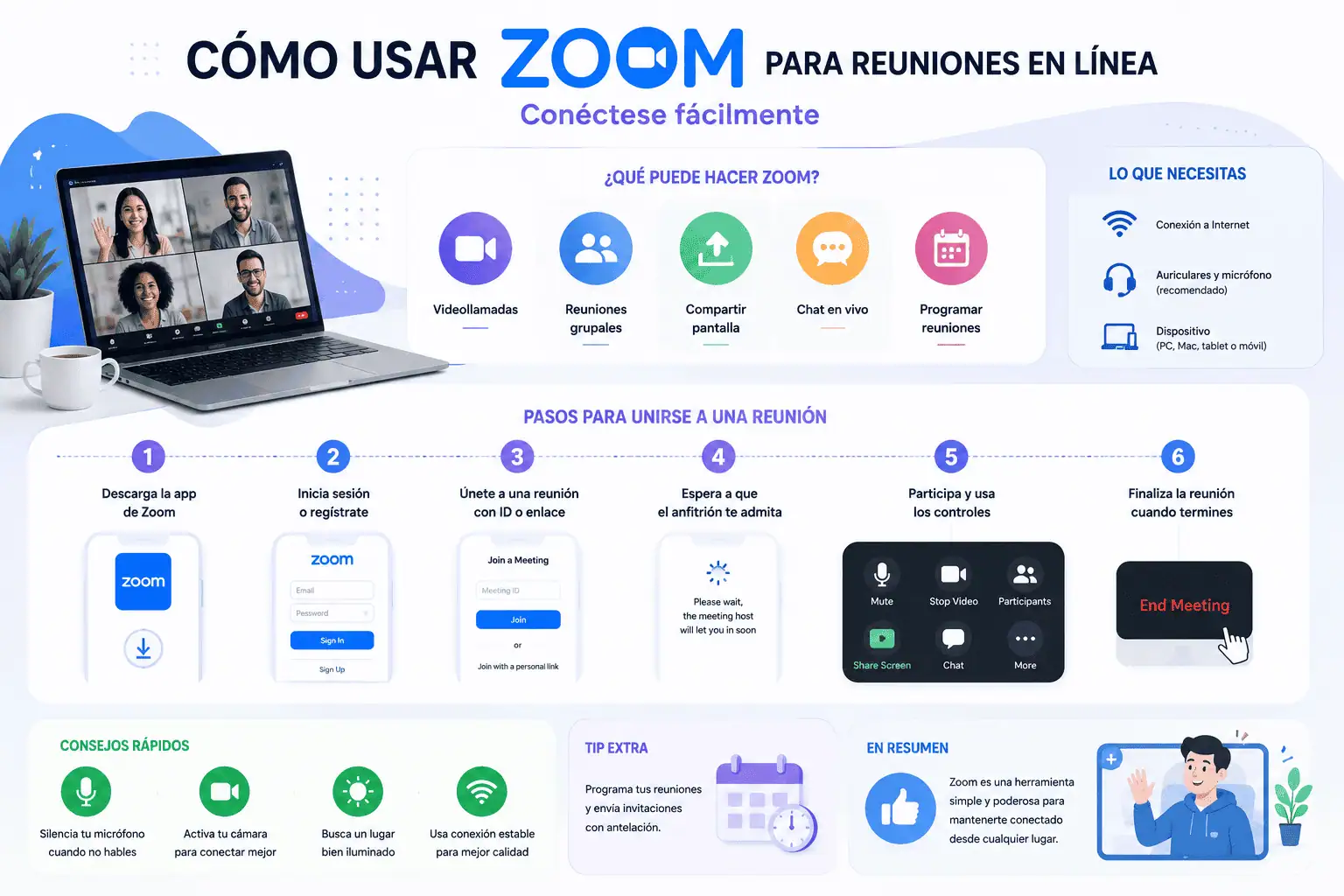
Cómo usar Zoom para reuniones en línea: Conéctese fácilmente
I. Configuración de tu cuenta de Zoom: La base para una comunicación fluida
Antes de organizar o participar en reuniones, es fundamental crear una cuenta de Zoom sólida. Esto implica más que proporcionar información básica; abarca medidas de seguridad, personalización del perfil y familiarizarse con la configuración de la plataforma.
A. Creación de cuenta y niveles de suscripción:
- Visita el sitio web de Zoom: Acceda al sitio web oficial de Zoom (zoom.us) para iniciar el proceso de registro. Haga clic en “Regístrese, es gratis” para comenzar.
- Métodos de registro: Puedes registrarte con tu correo electrónico, cuenta de Google o cuenta de Facebook. Usar tu correo electrónico te brinda mayor control y seguridad.
- Opciones de suscripción: Zoom ofrece varios niveles de suscripción:
- Básico (Gratis): Adecuado para particulares y equipos pequeños. Las limitaciones incluyen un límite de tiempo de 40 minutos para reuniones de grupo (3 o más participantes).
- Pro: Diseñado para pequeñas empresas. Amplía los límites de tiempo de las reuniones y ofrece funciones de generación de informes.
- Servicios empresariales: Dirigido a empresas medianas. Ofrece opciones de personalización de marca, soporte telefónico especializado y transcripciones.
- Enterprise: Para grandes organizaciones. Incluye almacenamiento ilimitado en la nube y revisiones empresariales para ejecutivos.
- Cómo elegir el plan adecuado: Evalúe la frecuencia, la duración y las funciones que necesita para sus reuniones para determinar la suscripción más rentable. Tenga en cuenta el crecimiento futuro al tomar su decisión.
B. Personalización del perfil: Proyectando una imagen profesional:
- Subir una foto de perfil: Una foto de perfil clara y profesional realza tu presencia y ayuda a los participantes a identificarte fácilmente. Asegúrate de que esté bien iluminada y recortada correctamente.
- Configura tu nombre de usuario: Elige un nombre de usuario que refleje con precisión tu identidad. Para reuniones de negocios, usa tu nombre completo y tu afiliación si es necesario.
- Configuración de la zona horaria: Configurar la zona horaria correcta es fundamental para programar reuniones de manera eficaz y evitar confusiones entre los participantes de diferentes regiones.
- ID de reunión personal (PMI): Tu PMI es una sala de reuniones virtual permanente. Úsala para reuniones recurrentes con el mismo grupo. Sin embargo, por motivos de seguridad, genera un nuevo ID de reunión para conversaciones confidenciales.
- Enlace personal: Una URL personalizable para tu sala de reuniones personal. Te permite compartir fácilmente tu PMI.
C. Configuración de seguridad: Proteja sus reuniones de intrusos:
- Sala de espera: Active la función de sala de espera. Esto le permite admitir manualmente a los participantes, evitando el acceso no autorizado.
- Contraseña de la reunión: Se requiere una contraseña para todas las reuniones. Comparta la contraseña de forma segura con los participantes invitados.
- Mute Participants Upon Entry: Automatically mute participants as they join the meeting to minimize background noise and disruptions.
- Disable Screen Sharing for Participants (Initially): Restrict participants’ ability to share their screens until needed, preventing inappropriate content from being displayed.
- Lock the Meeting: Once all expected participants have joined, lock the meeting to prevent further entry.
- Remove Disruptive Participants: Zoom allows hosts to remove participants who violate meeting guidelines or engage in disruptive behavior.
- Report a User: If you encounter severe violations, report the user to Zoom’s Trust & Safety team.
II. Scheduling and Hosting Zoom Meetings: Taking Control of Your Virtual Space
Mastering the art of scheduling and hosting effective Zoom meetings is critical for productive collaboration. This section covers the technical aspects and best practices for creating engaging and purposeful virtual gatherings.
A. Scheduling Meetings: Planning for Success:
- Using the Zoom Desktop Client/App: The Zoom desktop client or mobile app provides the most comprehensive scheduling options.
- Scheduling from Google Calendar/Outlook: Integrate Zoom with your existing calendar applications for seamless scheduling and reminders.
- Meeting ID Generation: Choose between generating a random meeting ID (recommended for increased security) or using your Personal Meeting ID (PMI) for recurring meetings.
- Setting Date, Time, and Duration: Accurately set the date, time, and anticipated duration of the meeting.
- Time Zone Selection: Specify the correct time zone to ensure all participants join at the intended time.
- Recurring Meetings: Schedule meetings to recur daily, weekly, monthly, or on a custom schedule.
- Registration Requirement: If you need to collect participant information beforehand, enable the registration feature.
- Advanced Options: Explore advanced options such as enabling/disabling the waiting room, automatically recording the meeting, and allowing participants to join before the host.
B. Starting a Meeting: Launching Your Virtual Collaboration:
- Starting from the Zoom Client/App: Locate the scheduled meeting in your Zoom client or app and click “Start.”
- Starting from Your Calendar: If you integrated Zoom with your calendar, click the Zoom link provided in the calendar event.
- Audio and Video Testing: Before the meeting officially begins, test your audio and video to ensure they are working correctly.
- Managing Participants: As the host, you have control over participant settings, including muting/unmuting, stopping video, and renaming participants.
C. Host Controls: Mastering the Meeting Environment:
- Muting/Unmuting Participants: Manage audio disruptions by muting participants or allowing them to unmute themselves.
- Stopping/Starting Video: Control participants’ video feeds to maintain focus and prevent distractions.
- Screen Sharing: Enable screen sharing for yourself or participants to present documents, presentations, or other content.
- Annotation Tools: Use annotation tools to highlight important information on shared screens.
- Chat Function: Facilitate communication and collaboration through the chat function. Choose to allow participants to chat with everyone, only the host, or specific individuals.
- Polling: Create polls to gather feedback from participants during the meeting.
- Breakout Rooms: Divide participants into smaller groups for focused discussions or activities using breakout rooms.
- Recording: Record the meeting for future reference or for participants who were unable to attend. Be sure to inform participants that the meeting is being recorded.
- Live Transcription: Utilize the live transcription feature to generate real-time captions of the meeting dialogue.
III. Participating in Zoom Meetings: Contributing Effectively and Professionally
Joining and actively participating in Zoom meetings requires etiquette and technical awareness. This section provides guidelines for being a valuable contributor in a virtual setting.
A. Joining a Meeting: Connecting to the Virtual Space:
- Clicking the Meeting Link: The easiest way to join a meeting is by clicking the meeting link provided in the invitation.
- Entering the Meeting ID and Password: Alternatively, you can manually enter the meeting ID and password in the Zoom client or app.
- Joining Audio: Choose to join with computer audio or dial in using a phone. Testing your audio before joining is recommended.
- Enabling Video: Enable your video to participate visually. Be mindful of your background and appearance.
B. Best Practices for Participants: Being a Valuable Contributor:
- Mute Yourself When Not Speaking: Minimize background noise by muting yourself when you are not actively speaking.
- Use the “Raise Hand” Feature: If you have a question or comment, use the “Raise Hand” feature to signal your intention to speak.
- Engage in the Chat: Use the chat function to ask questions, share resources, or provide feedback.
- Be Mindful of Your Background: Choose a neutral background or use a virtual background to minimize distractions.
- Dress Appropriately: Dress as you would for an in-person meeting.
- Evite realizar varias tareas a la vez: Concéntrese en la reunión y evite realizar varias tareas simultáneamente para asegurarse de estar completamente involucrado.
- Sé respetuoso: Trata a todos los participantes con respeto y evita interrumpir o hablar por encima de los demás.
C. Solución de problemas comunes: Cómo resolver fallos técnicos:
- Problemas de audio: Compruebe la configuración del micrófono, asegúrese de que no esté silenciado e intente reiniciar el audio.
- Problemas de vídeo: Compruebe la configuración de su cámara, asegúrese de que esté activada e intente reiniciar la grabación de vídeo.
- Problemas de conexión: Compruebe su conexión a Internet e intente reiniciar su router.
- Problemas con el cliente de Zoom: Intente reiniciar el cliente o la aplicación de Zoom. Si el problema persiste, considere reinstalar la aplicación.
Al dominar estos aspectos de Zoom, podrá aprovechar eficazmente sus capacidades para realizar reuniones en línea sin contratiempos, fomentando una colaboración productiva y conexiones sólidas.