ChatGPT para empresas: una guía completa
I. Comprensión de ChatGPT y sus capacidades
ChatGPT, desarrollado por OpenAI, es un sofisticado modelo de lenguaje que aprovecha la arquitectura GPT (Generative Pre-trained Transformer). Su función principal es predecir la siguiente palabra en una secuencia, entrenado con un enorme conjunto de datos de texto y código. Este entrenamiento le permite generar texto con un lenguaje natural, traducir idiomas, escribir diversos tipos de contenido creativo y responder preguntas de forma clara y concisa. Para las empresas, esto se traduce en una potente herramienta capaz de automatizar diversas tareas, mejorar la interacción con los clientes e impulsar la innovación.
Sin embargo, para comprender las capacidades de ChatGPT también es necesario reconocer sus limitaciones. En ocasiones, puede generar información errónea («alucinaciones»), reflejar sesgos presentes en sus datos de entrenamiento y tener dificultades con razonamientos complejos o matizados. Por lo tanto, una implementación responsable requiere una supervisión y validación cuidadosas de sus resultados.
II. Principales aplicaciones comerciales de ChatGPT
La versatilidad de ChatGPT permite una amplia gama de aplicaciones en diversas funciones empresariales:
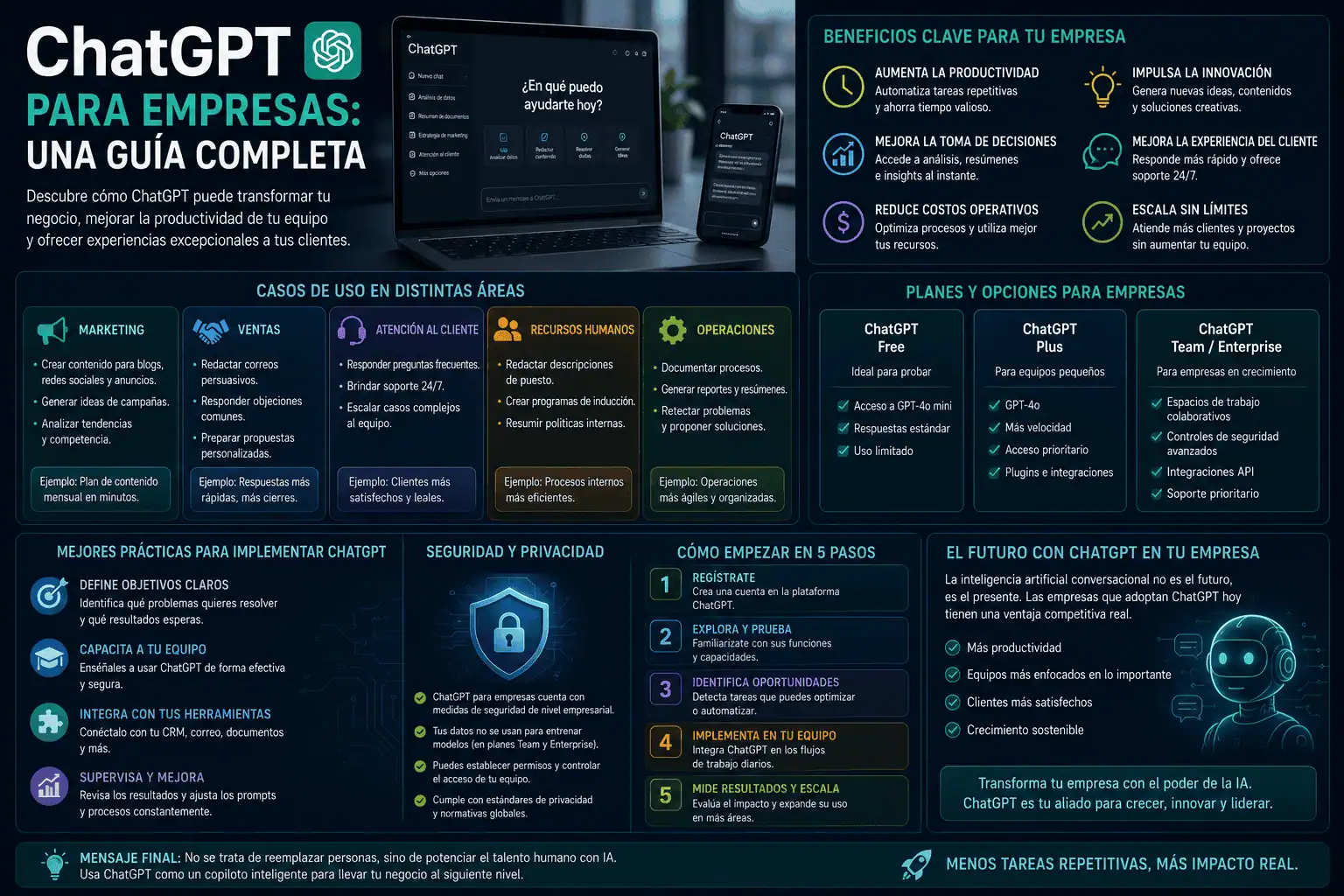
- Atención al cliente: ChatGPT puede potenciar chatbots que gestionan consultas frecuentes, proporcionan información sobre productos, resuelven problemas básicos y derivan casos complejos a agentes humanos. Esto reduce significativamente los tiempos de espera, mejora la satisfacción del cliente y permite que los agentes se centren en problemas más complejos. Imagínelo como un representante de soporte disponible las 24 horas, los 7 días de la semana, capaz de responder preguntas frecuentes, ayudar con el seguimiento de pedidos y ofrecer consejos básicos para la resolución de problemas.
- Creación y marketing de contenido: ChatGPT destaca por generar diversos tipos de contenido, como entradas de blog, artículos, actualizaciones para redes sociales, campañas de email marketing, textos para sitios web, descripciones de productos e incluso guiones para vídeos. También facilita la generación de ideas, el perfeccionamiento del contenido existente y la optimización para motores de búsqueda. Por ejemplo, un equipo de marketing puede usar ChatGPT para generar varias versiones de anuncios y probar diferentes estrategias de comunicación.
- Ventas y generación de clientes potenciales: ChatGPT permite personalizar las comunicaciones de ventas, cualificar clientes potenciales y automatizar el seguimiento por correo electrónico. Analiza los datos de los clientes para identificar clientes potenciales, crear mensajes personalizados adaptados a sus necesidades e intereses específicos y programar correos electrónicos de seguimiento automatizados. Esto puede mejorar significativamente las tasas de conversión y reducir la carga de trabajo de los equipos de ventas. Imagínese a un representante de ventas utilizando ChatGPT para generar secuencias de correo electrónico personalizadas para diferentes segmentos de clientes según su actividad en el sitio web.
- Internal Communication and Knowledge Management: ChatGPT can be used to create internal knowledge bases, generate meeting summaries, and automate internal communication tasks. It can organize and summarize company documents, answer employee questions, and facilitate communication between different departments. This can improve employee productivity, reduce information silos, and enhance overall organizational efficiency. For example, a company can create a ChatGPT-powered internal helpdesk that answers employee questions about HR policies and procedures.
- Data Analysis and Reporting: ChatGPT can assist with data analysis by summarizing data sets, identifying trends, and generating reports. While it’s not a replacement for specialized data analysis tools, it can provide a quick and easy way to gain insights from data without requiring advanced technical skills. A business analyst could use ChatGPT to summarize key findings from customer survey data or generate a report on sales performance by region.
- Software Development and Code Generation: While not a replacement for experienced programmers, ChatGPT can assist with code generation, debugging, and documentation. It can generate code snippets in various programming languages, explain existing code, and identify potential errors. This can accelerate the software development process and improve code quality.
III. Implementing ChatGPT in Your Business: A Step-by-Step Guide
- Define Clear Objectives: Before implementing ChatGPT, clearly define your business goals and how ChatGPT can help achieve them. What specific problems are you trying to solve? What metrics will you use to measure success? Are you aiming to improve customer satisfaction, increase sales, reduce operational costs, or enhance employee productivity? Specific goals will inform your implementation strategy.
- Choose the Right Platform and Model: OpenAI offers various access methods to ChatGPT, including the API, the web interface, and integrations with other platforms. Choose the method that best suits your needs and technical capabilities. Consider the different GPT models available (e.g., GPT-3.5, GPT-4) and select the one that provides the best balance of performance, cost, and complexity for your specific use case.
- Data Preparation and Training (if applicable): For certain applications, such as building custom chatbots or personalizing content, you may need to fine-tune ChatGPT with your own data. This involves preparing your data, cleaning it, and training the model to better understand your specific needs and requirements. OpenAI provides tools and resources to facilitate this process. Consider the ethical implications of using your data to train the model and ensure you have the necessary permissions and consent.
- Prompt Engineering: Crafting effective prompts is crucial for getting the desired results from ChatGPT. Prompts should be clear, concise, and specific, providing the model with enough context to generate relevant and accurate responses. Experiment with different prompts to find what works best for your specific use case. Techniques like “few-shot learning” (providing examples of desired outputs) can significantly improve the quality of ChatGPT’s responses.
- Integration with Existing Systems: Seamlessly integrate ChatGPT with your existing business systems, such as CRM, marketing automation platforms, and customer service software. This will allow you to automate workflows, personalize interactions, and track performance more effectively. Ensure data security and privacy when integrating ChatGPT with your systems.
- Monitoring and Evaluation: Continuously monitor ChatGPT’s performance and evaluate its effectiveness in achieving your business goals. Track key metrics such as customer satisfaction, conversion rates, and cost savings. Use this data to identify areas for improvement and refine your implementation strategy.
- Security and Ethical Considerations: Address security and ethical considerations proactively. Implement measures to protect sensitive data, prevent misuse of the technology, and ensure fairness and transparency. Develop clear guidelines for using ChatGPT and train your employees on responsible use. Be aware of potential biases in the model and take steps to mitigate them.
IV. Best Practices for Using ChatGPT in Business
- Human Oversight: Always maintain human oversight of ChatGPT’s outputs, especially in critical applications such as customer service and legal compliance. ChatGPT is a tool, not a replacement for human judgment.
- Prompt Engineering is Key: Invest time in crafting effective prompts that elicit the desired responses from ChatGPT. Experiment with different prompts and techniques to optimize performance.
- Data Privacy and Security: Prioritize data privacy and security when using ChatGPT. Implement measures to protect sensitive data and comply with relevant regulations.
- Transparency and Disclosure: Be transparent with your customers and employees about the use of ChatGPT. Disclose when they are interacting with a chatbot powered by AI.
- Continuous Learning and Improvement: Stay up-to-date with the latest developments in ChatGPT technology and continuously learn and improve your implementation strategy. OpenAI is constantly releasing new features and updates.
- Training and Documentation: Train your employees on how to effectively use ChatGPT and provide clear documentation on best practices and guidelines.
- Ciclos de retroalimentación: Establezca ciclos de retroalimentación para recopilar información de los usuarios e identificar áreas de mejora en el rendimiento y la experiencia del usuario de ChatGPT.
V. El futuro de ChatGPT en los negocios
El futuro de ChatGPT en el ámbito empresarial es prometedor, gracias a los continuos avances en los modelos de lenguaje y a su creciente adopción en diversos sectores. Podemos esperar lo siguiente:
- Modelos más sofisticados: Las futuras versiones de ChatGPT serán aún más potentes y capaces, con mejores capacidades de razonamiento, mayor precisión fáctica y una comprensión más matizada del lenguaje.
- Experiencias personalizadas: ChatGPT permitirá a las empresas ofrecer experiencias cada vez más personalizadas a sus clientes, adaptando las interacciones a las necesidades y preferencias individuales.
- Automatización de tareas complejas: ChatGPT automatizará tareas cada vez más complejas, lo que permitirá a los empleados centrarse en un trabajo más estratégico y creativo.
- Integración con tecnologías emergentes: ChatGPT se integrará con tecnologías emergentes como la realidad aumentada (RA) y la realidad virtual (RV), creando nuevas oportunidades para experiencias inmersivas e interactivas.
- Mayores consideraciones éticas: A medida que ChatGPT se vuelve más potente, las consideraciones éticas cobrarán aún más importancia. Las empresas deberán abordar cuestiones como el sesgo, la equidad y la transparencia para garantizar un uso responsable de la tecnología.
Al comprender las capacidades de ChatGPT, implementarlo estratégicamente y seguir las mejores prácticas, las empresas pueden aprovechar esta potente tecnología para impulsar la innovación, mejorar la experiencia del cliente y alcanzar sus objetivos comerciales. La clave reside en considerarlo una herramienta colaborativa que complementa las capacidades humanas en lugar de reemplazarlas por completo.