Consolas de videojuegos de 2026: una comparación directa
El panorama de los videojuegos está en constante evolución. Para 2026, la generación actual de consolas serán veteranas experimentadas, posiblemente enfrentándose a sucesoras o versiones con importantes mejoras. Este análisis profundiza en las características, capacidades y posibles inconvenientes previstos de los probables contendientes en el mercado de consolas de 2026, centrándose en una hipotética PlayStation 6 (PS6), Xbox Series X|Z (suponiendo una actualización de mitad de generación o un modelo completamente nuevo) y una posible Steam Deck 2 o una potente consola portátil de posicionamiento similar.
PlayStation 6 (PS6): El campeón de la experiencia inmersiva
PlayStation de Sony siempre ha priorizado las experiencias de juego inmersivas, y es probable que la PS6 redoble esta apuesta por esta estrategia. Se esperan avances significativos en varias áreas clave:
- Potencia de procesamiento y arquitectura: AMD probablemente continuará siendo el socio tanto para la CPU como para la GPU. La PS6 sin duda utilizará un chip de diseño propio basado en las arquitecturas de vanguardia Zen y RDNA. Los objetivos de rendimiento serán ambiciosos, buscando ofrecer juegos en 8K de forma consistente a altas velocidades de fotogramas (60-120 fps) y llevar al límite el trazado de rayos en tiempo real. La arquitectura podría incorporar núcleos de aceleración de IA dedicados, similares a los Tensor Cores de las GPU de Nvidia, lo que permitiría funciones avanzadas basadas en IA, como un comportamiento mejorado de los NPC, entornos fotorrealistas y ajustes dinámicos en la jugabilidad.
- Almacenamiento y memoria: La ya impresionante tecnología SSD NVMe de la PS5 se perfeccionará aún más. Se esperan tiempos de carga aún más rápidos y una transmisión de mundos fluida. La capacidad de RAM probablemente aumentará significativamente, posiblemente hasta 32 GB o incluso 48 GB de memoria GDDR7, lo que proporcionará un amplio margen para recursos de juego complejos y procesamiento avanzado de IA. La implementación de tecnologías similares a DirectStorage, que permiten el acceso directo de la GPU a la SSD, será crucial para minimizar los cuellos de botella.
- Gráficos y fidelidad visual: La PS6 estará diseñada para aprovechar al máximo el potencial de las técnicas de renderizado avanzadas. El trazado de rayos se convertirá en un estándar, no en una simple opción, lo que permitirá una iluminación, reflejos y sombras realistas en cada juego. Se esperan más innovaciones en iluminación global, efectos volumétricos y generación procedural, lo que dará como resultado mundos de juego visualmente impresionantes y con un nivel de detalle increíble. La consola también podría incorporar tecnologías como el sombreado de tasa variable (VRS) para optimizar el rendimiento mediante la asignación inteligente de recursos de renderizado.
- Audio e inmersión: La tecnología de audio 3D de Sony seguirá evolucionando, incorporando potencialmente perfiles de audio personalizados según las características auditivas de cada usuario. La retroalimentación háptica será aún más sofisticada, extendiéndose posiblemente más allá del mando a otros periféricos como auriculares para juegos o incluso trajes especializados. La integración de capacidades avanzadas de realidad virtual (RV) será crucial. Se espera un casco PlayStation VR de próxima generación con pantallas de mayor resolución, un campo de visión más amplio, un seguimiento mejorado y un diseño más cómodo. La PS6 podría incluir aceleración de hardware dedicada para la renderización de RV, mejorando aún más el rendimiento y la fidelidad visual en los juegos de RV.
- Conectividad y servicios en línea: Wi-Fi 7 será el estándar, ofreciendo velocidades inalámbricas significativamente más rápidas y menor latencia. Es probable que la PS6 también sea compatible con juegos en la nube como función adicional, lo que permitirá a los jugadores transmitir juegos a diversos dispositivos. PlayStation Plus seguirá evolucionando, ofreciendo una amplia biblioteca de juegos, multijugador en línea y contenido exclusivo. La integración de funciones sociales y la participación de la comunidad seguirán siendo aspectos clave.
Xbox Series X|Z: Pionera en ecosistemas y juegos en la nube.
La estrategia de Microsoft para Xbox gira en torno a la creación de un ecosistema de juegos integral que abarque consolas, PC y servicios en la nube. La Series X|Z, ya sea una actualización o una nueva generación, consolidará aún más este enfoque.
- Potencia de procesamiento y arquitectura: Al igual que en la PS6, se espera que AMD sea el principal socio de hardware. La Series X|Z probablemente contará con un chip de diseño personalizado que aprovechará las últimas arquitecturas Zen y RDNA, e incorporará posiblemente diseños de chiplets para mejorar la escalabilidad y el rendimiento. Microsoft se centrará en ofrecer un rendimiento constante en una amplia gama de juegos y resoluciones. Las capacidades de aprendizaje automático también serán cruciales, utilizándose potencialmente para el escalado de imagen, el aumento de la velocidad de fotogramas y otras optimizaciones de rendimiento.
- Almacenamiento y memoria: La arquitectura Velocity, introducida en la Series X/S, se mejorará aún más. Se esperan SSD NVMe más rápidos y un sistema de gestión de datos optimizado. La capacidad de RAM probablemente igualará o superará la de la PS6, lo que garantiza un amplio margen para juegos complejos y procesamiento avanzado de IA. La continua optimización de Smart Delivery asegurará que los juegos se adapten automáticamente a las capacidades del dispositivo Xbox específico, minimizando los requisitos de almacenamiento y maximizando el rendimiento.
- Gráficos y fidelidad visual: La Series X|Z buscará ofrecer juegos visualmente impresionantes con técnicas de renderizado avanzadas. El trazado de rayos será una característica estándar, y es probable que Microsoft continúe invirtiendo en sus propias tecnologías gráficas, como DirectX Raytracing (DXR). La consola también podría incorporar tecnologías como sombreadores de malla y retroalimentación de muestreo para mejorar la eficiencia del renderizado y la fidelidad visual.
- Juegos en la nube e integración del ecosistema: Xbox Game Pass seguirá siendo la piedra angular del ecosistema Xbox. Se espera que se añadan aún más juegos al servicio, y es probable que Microsoft continúe invirtiendo en tecnología de juegos en la nube, lo que permitirá a los jugadores transmitir juegos a una gama más amplia de dispositivos, incluyendo teléfonos móviles, tabletas y televisores inteligentes. La integración entre las consolas Xbox, los PC y los juegos en la nube será perfecta, lo que permitirá a los jugadores cambiar de dispositivo y continuar sus partidas sin interrupciones. Es probable que Microsoft también invierta en el juego multiplataforma y la progresión cruzada, lo que permitirá a los jugadores conectarse con amigos y continuar su progreso en diferentes plataformas.
- Conectividad y servicios en línea: Wi-Fi 7 será el estándar, y es probable que Microsoft continúe invirtiendo en sus servicios en línea, como Xbox Live. La integración de funciones sociales y la participación de la comunidad seguirán siendo prioritarias, y Microsoft podría explorar nuevas formas de conectar a los jugadores entre sí.
Steam Deck 2 (o un dispositivo portátil similar de gran potencia): El revolucionario de los juegos de PC portátiles.
El éxito de la Steam Deck ha demostrado la demanda de juegos de PC portátiles. Para 2025, podemos esperar un dispositivo portátil más potente y sofisticado, ya sea directamente de Valve (Steam Deck 2) o de un competidor:
- Potencia de procesamiento y arquitectura: AMD vuelve a ser el principal candidato para la APU (Unidad de Procesamiento Acelerado). El Steam Deck 2 necesitará un salto de rendimiento significativo para ejecutar juegos modernos con ajustes aceptables en su pantalla integrada. Se espera una APU de diseño personalizado basada en las últimas arquitecturas Zen y RDNA. El objetivo será maximizar el rendimiento manteniendo la duración de la batería y la eficiencia térmica.
- Pantalla y ergonomía: Se espera una pantalla de mayor resolución (posiblemente 1080p o incluso 1440p) con mayor precisión de color y frecuencia de actualización mejorada. El diseño ergonómico probablemente se perfeccionará, priorizando la comodidad y la facilidad de uso. El dispositivo también podría incorporar una pantalla más grande y una disposición de controles optimizada.
- Almacenamiento y memoria: El almacenamiento SSD NVMe más rápido será crucial para reducir los tiempos de carga y mejorar el rendimiento de los juegos. Es probable que la capacidad de RAM aumente a al menos 16 GB, lo que proporcionará un amplio margen para los juegos modernos.
- Sistema operativo y software: SteamOS, basado en Linux, probablemente seguirá siendo el sistema operativo preferido. Valve continuará mejorando SteamOS, optimizándolo para juegos portátiles y ofreciendo una experiencia de usuario fluida. Es probable que el dispositivo sea compatible con una amplia gama de juegos y emuladores de PC.
- Conectividad y duración de la batería: Wi-Fi 6E o Wi-Fi 7 serán estándar. La mejora en la tecnología de la batería y la gestión de energía serán cruciales para prolongar el tiempo de juego. El dispositivo también podría incorporar carga rápida.
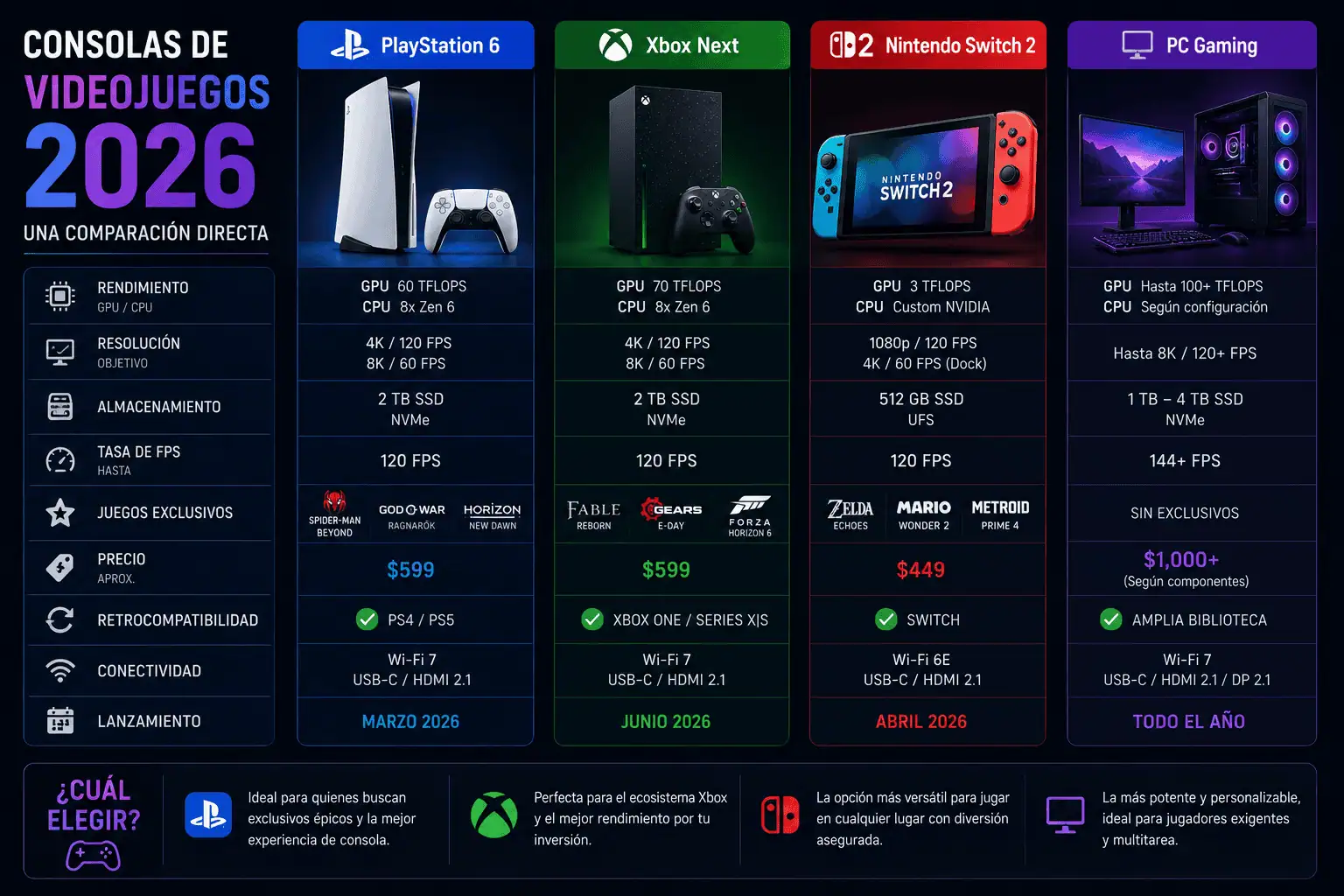
Tabla comparativa directa:
| Característica | PlayStation 6 | Xbox Series X|Z | Steam Deck 2 (o similar) |
|—|—|—|—|
| Resolución objetivo | 8K | 8K | 1080p/1440p |
| Velocidad de fotogramas objetivo | 60-120 fps | 60-120 fps | 30-60 fps |
| Tecnología gráfica | Trazado de rayos avanzado, iluminación global | Trazado de rayos avanzado, trazado de rayos DirectX | Sombreado de tasa variable, equivalente a FSR/DLSS |
| Almacenamiento | SSD NVMe ultrarrápido | SSD NVMe ultrarrápido | SSD NVMe rápido |
| Memoria | 32 GB+ GDDR7 | 32 GB+ GDDR7 | 16 GB+ LPDDR5 |
| Ecosistema | PlayStation Network, PlayStation Plus | Xbox Game Pass, Xbox Live, juegos en la nube | Steam, sistema operativo basado en Linux |
| Características únicas | Audio 3D inmersivo, háptica avanzada, compatibilidad con realidad virtual de próxima generación | Integración de juegos en la nube, juego multiplataforma, entrega inteligente | Juegos de PC portátiles, amplia compatibilidad de juegos |
| Precio probable | $599 – $699 | $499 – $599 | $499 – $799 |
Esta comparación pone de relieve las posibles fortalezas y debilidades de cada consola. Es probable que la PS6 se centre en ofrecer las experiencias de juego más inmersivas y visualmente impactantes, mientras que la Xbox Series X|Z priorizará su ecosistema y sus capacidades de juego en la nube. El Steam Deck 2 (o un dispositivo similar) estará dirigido a los jugadores que valoran la portabilidad y el acceso a una amplia biblioteca de juegos de PC. La elección final dependerá de las preferencias y prioridades de cada usuario.